
Your needs, this model
Does it fit your priorities?
Is the M10 Storm built with three layers and a recycled-nylon-ripstop face?
Yes. Patagonia describes a three-layer H2No shell with a 2.6-ounce, 30-denier ECONYL 100% recycled-nylon-ripstop face and a 7-denier knit backer. This is material identification, not a durability test.
Explore this need in the finder →Does it self-stow, and where?
Yes. Patagonia says the jacket quickly self-stuffs into its left-chest pocket, which includes a carabiner clip loop. The source provides no packed-volume result.
Explore this need in the finder →Does its adjustable helmet-compatible hood establish pit zips?
No. The page documents a helmet-compatible hood and two chest pockets but does not list underarm pit zips. Those features should not be conflated.
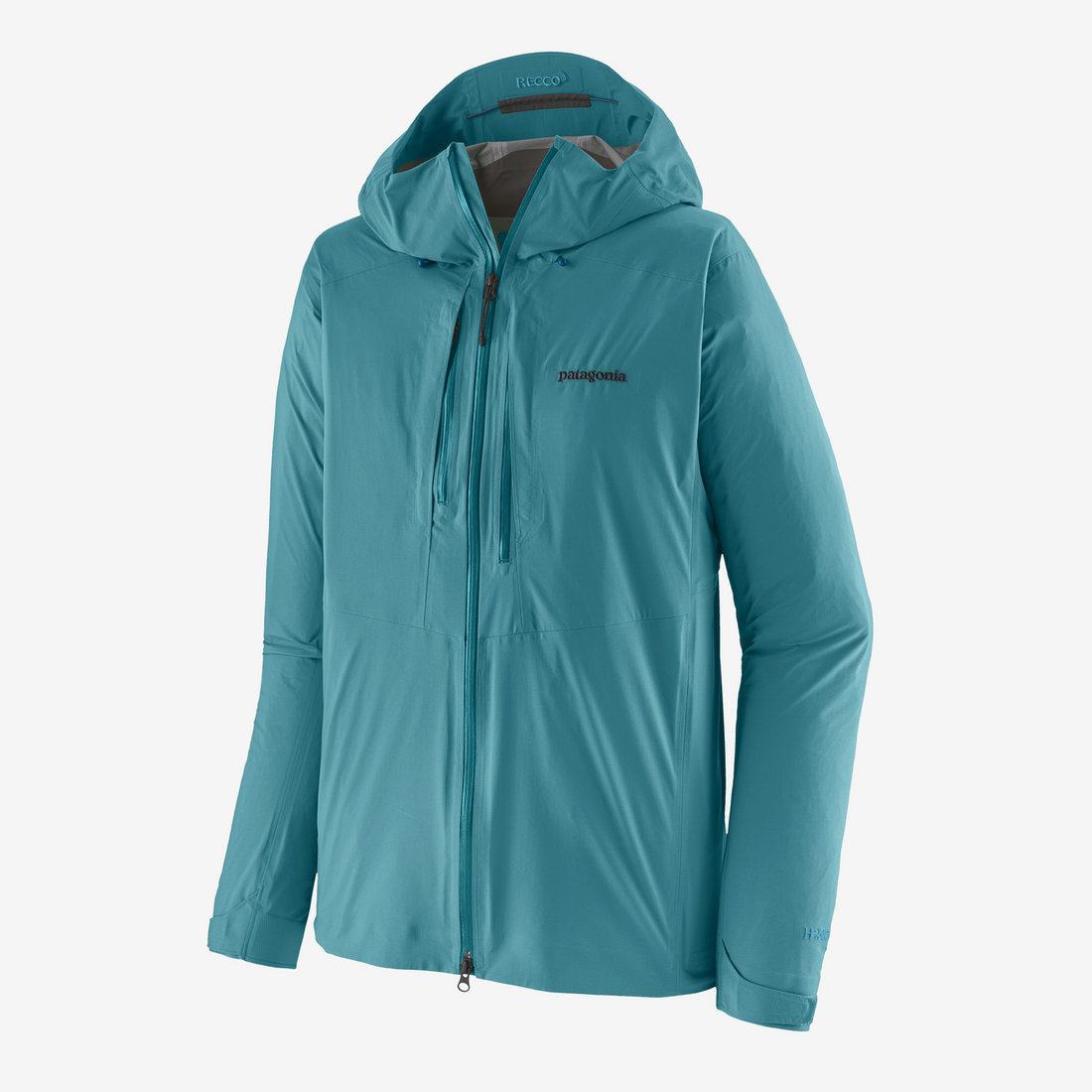
Explore this need in the finder →Patagonia Men's M10 Storm Jacket, U.S. style 85910, is a slim, three-layer shell for alpine movement. Its identity is more specific than the shared M10 name: Patagonia describes a recycled-nylon-ripstop H2No shell, two offset chest pockets, a helmet-compatible hood, a RECCO reflector and a 310 g listed weight. This review interprets those published details; it does not claim climbing use, personal fit, rain testing or measured performance.
A heavier structure than a minimal running shell
Patagonia specifies a three-layer H2No Performance Standard shell with a 2.6-ounce, 30-denier ECONYL 100% recycled-nylon-ripstop face and a 7-denier knit backer. The page also names a waterproof/breathable barrier and a DWR finish. The product description states that the fabric, membrane and finish are made without intentionally added PFAS. That is the maker's stated treatment scope, not an unqualified claim about every chemical or every component.
The manufacturer lists 310 g (10.93 oz). For context, the 204 g Men's Storm Racer, style 24112, uses a lighter listed weight and a running-oriented profile; the M10 Anorak, style 85880, is listed at 300 g and has a different fabric stack and center-zip layout. Those manufacturer figures are not independent weighings and do not rank performance or durability. The 30-denier face identifies a construction choice, not a laboratory abrasion result.
Patagonia's product page gives no numerical waterproof-pressure or breathability value for style 85910. A three-layer label and the H2No name can help identify the design, but they do not answer how it will perform in a particular storm, at a particular pace or after long use. Treat the materials and feature list as evidence about the model, not as a substitute for independent testing that is not present here.
Alpine features are arranged around gloves and a helmet
The hood is called alpine helmet-compatible and has two adjustment points, giving the product a more explicit headwear brief than the Storm Racer page. The front closure is a coated waterproof zipper with an internal storm flap and a zipper garage. At the chest, Patagonia lists two offset watertight pockets of different sizes: the larger left pocket is described for bulky gloves, while the right is smaller. This pocket placement is a deliberate alpine storage choice; it is not the same as a conventional pair of handwarmer pockets.
The cuffs use a low-profile hook-and-loop adjustment, with textured polyurethane on the inside to grip a wrist or glove when secured. A dual-adjust drawcord hem is another way to close the lower edge. These controls give a buyer specific features to compare against their own layers, gloves and harness routine, but no source here confirms how easily an individual can operate them with cold hands or while wearing a particular glove.
A RECCO reflector is built in. Patagonia describes it as a directional signal that can help rescuers locate the reflector. This is a single documented feature, not a promise of rescue coverage or a replacement for the safety equipment, training and plan an alpine trip requires.
Pocket stow is documented; underarm vents are not
The M10 Storm quickly self-stuffs into its left-chest pocket, which has a carabiner clip loop. That is a supported pocket-stow route, although Patagonia does not publish the resulting bundle size. If a small packed footprint is important, test the seller's exact version against your actual carrying system rather than assuming “self-stuffs” guarantees a particular volume.
The official feature list does not identify underarm pit zips. The jacket's waterproof/breathable shell and adjustable center closure should not be counted as evidence of that separate mechanical feature. Buyers who specifically require underarm vents should compare models with an explicit pit-zip listing; otherwise, note that this page's absence is a documentation gap, not proof that no heat can escape through other parts of the design.
Fit label and system limits
Patagonia labels the fit slim. That wording is useful for setting expectations, but it cannot predict how the jacket will sit over an insulating layer, climbing harness or pack on an individual body. Use the men's body-size chart, then check the exact jacket and the range of movement you expect; the published specification does not provide garment measurements or a personal fitting.
There is no included insulating layer and no maker temperature range in the checked listing. The jacket is therefore a shell-only option in this library, with warmth supplied by layers chosen separately. Its listed weight, waterproof/breathable claim and Recco detail do not make it a warm parka, and no temperature should be inferred from the fabric weight or name.
Care is a model-specific part of ownership
Patagonia calls for cold machine washing, no bleach or fabric softener, low tumble drying, a cool iron and no steam. Follow this exact garment label; the page does not provide a reproofing schedule.
Who should compare it closely
Style 85910 deserves a close look when the buyer wants a men's slim-fit shell with a helmet-compatible hood, two accessible chest pockets, a left-pocket stuff route and a built-in RECCO reflector. Its strongest differences from the Storm Racer are the additional pocket layout and alpine-oriented hood; its distinction from the M10 Anorak is the regular full-front closure and two-pocket chest arrangement rather than a single pocket and climbing-tapered anorak pattern. If pit zips, hand pockets, a numeric membrane test or guaranteed room for a specific underlayer are essential, the exact product page does not settle those questions.
Before ordering, verify that the offer is style 85910 rather than another M10 model, match the size chart to your body, and decide whether its slim profile and listed storage fit your use. Check the current seller's color and size, the garment label and return terms. No claim here depends on ownership or a hands-on test; the assessment is limited to Patagonia's published US product details and the closely identified color reference image.
Key specifications
Key details at a glance
| Shell construction | 3-layer shell |
|---|---|
| Manufacturer-listed weight | 310 g |
| Manufacturer fit label | Slim |
| Face fabric | 100% recycled nylon ripstop |
| Stows in its own pocket | Yes |
| Manufacturer PFAS wording | Made without intentionally added PFAS |
Use the exact model’s instructions for operating limits, supplied equipment and version differences.
Sources for this review
Sources for this assessment
Build a shortlist from documented features
The finder compares explicit product facts, not a rain test, fit guarantee or promise of comfort.