
Your needs, this model
Does it fit your priorities?
Does M16733 have the requested recycled nylon ripstop face?
Yes. Marmot lists 100% recycled nylon ripstop for the exact M16733 shell. The page gives no face denier and the material label does not by itself rate durability.
Explore this need in the finder →What does the M16733 PFAS statement actually cover?
Marmot's page ties the intentionally-added-PFAS wording to its C0 DWR treatment on the face fabric. It is not an unrestricted statement that every part of the finished jacket contains no PFAS.
Explore this need in the finder →Can I open pit zips or pack the M16733 into its own pocket?
Marmot describes the jacket as stuffing into its own pocket. Its checked feature list does not confirm underarm pit zips, so the pocket-stow fact should not be carried over to a venting claim.
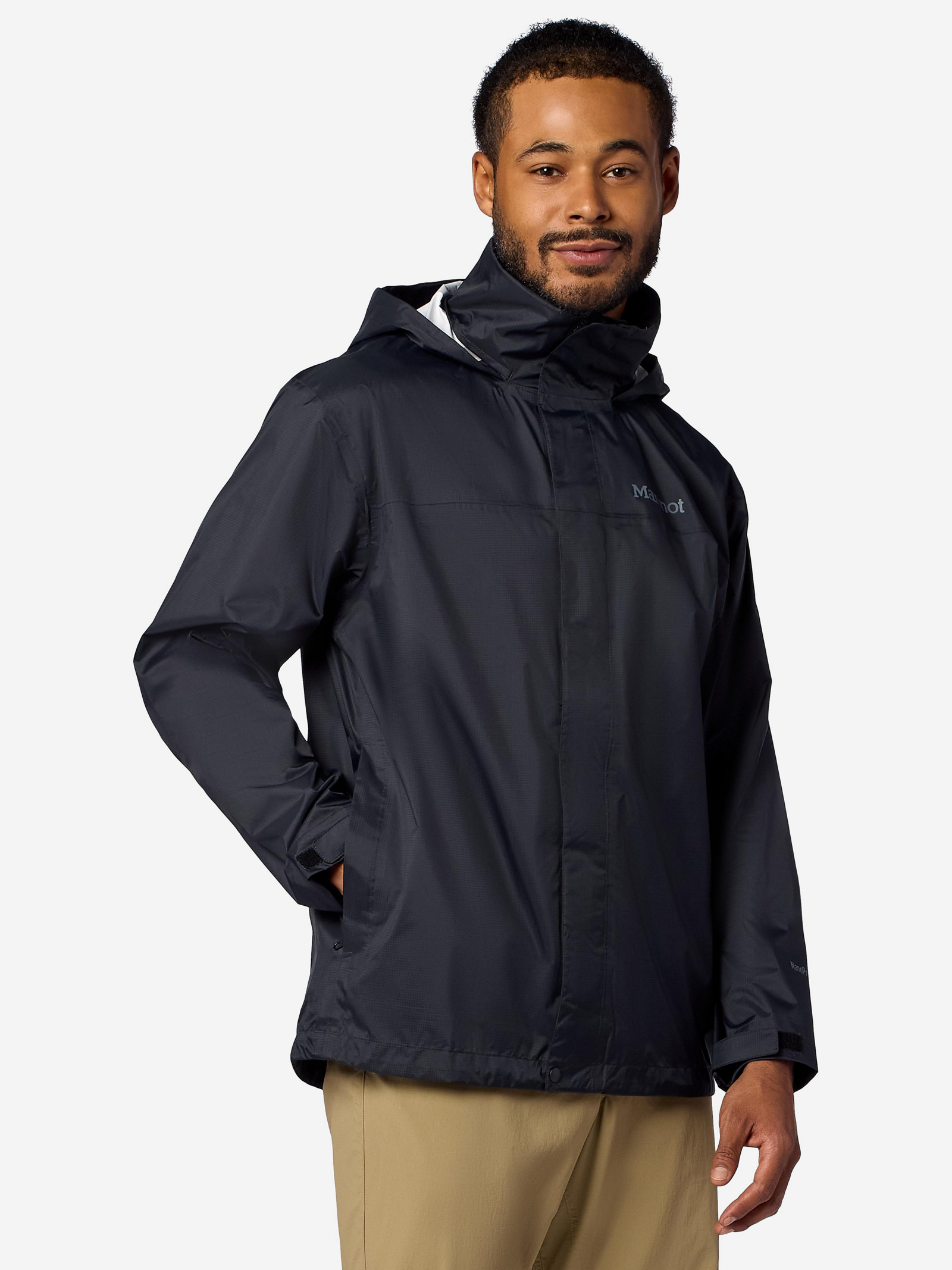
Explore this need in the finder →The exact product assessed here is Marmot’s men’s PreCip Evo Rain Jacket, style M16733—not the similarly named Flex or Pro. Its verified US page describes a 2.5-layer NanoPro shell made with recycled nylon ripstop, lists its own-pocket stow method, and makes a limited statement about the C0 durable-water-repellent treatment. The page does not confirm every feature a shopper might expect from a rain jacket, so this review keeps undocumented details open rather than filling them in from another PreCip style.
Material and construction on the M16733 page
Marmot calls this a lightweight, breathable 2.5-layer waterproof fabric and lists 100% recycled nylon ripstop for the main fabric at 83 g/m². It also says the garment seams are taped. Marmot’s listed garment weight is 283 grams and its listed center-back length is 30 inches. The fabric specification does not identify a face denier, and its mass is not a durability score. The page gives no numeric waterproof-pressure or breathability result, so neither a layer count nor the NanoPro name can stand in for a comparative performance test.
The product is presented as an uninsulated shell, with an “ergo hood” described but no separate warmth liner. That supports a shell-only arrangement: the wearer supplies any additional insulation. Marmot labels the fit Regular Fit and lists S through XXL; use its current men’s size guide and check movement and layering in the size under consideration. A fit label and body-size chart cannot tell us how the jacket fits an individual.
Read the PFAS wording narrowly
Marmot’s product page says the C0 DWR treatment repels water from the face fabric without intentionally added PFAS chemicals. That is the exact scope recorded here. It is not broadened into a claim that the complete garment, every component or all manufacturing processes are PFAS-free. This style-specific statement also should not be copied onto the Evo Flex or Evo Pro pages, which do not make the same statement in the material reviewed.
Pocket stow, with an important ventilation unknown
The product description says that the shell stows into its own pocket. It does not identify which pocket or provide the packed volume. The feature list describes an adjustable ergo hood, but the checked page does not name pit zips. That is an unknown in this assessment, not proof that no version has them. If underarm ventilation is essential, do not count M16733 as a confirmed pit-zip match based on the nearby Evo Flex M16738 or Evo Pro M16737; each is a separate style.
Likewise, the exact page does not list a pack-belt pocket layout, a carabiner loop, numerical fabric testing or a helmet-compatible hood. The absence of those details from this checked source means we cannot use them as confirmed capabilities.
Where it sits within the PreCip group
Compared with Evo Flex, this Evo has the recycled-nylon-ripstop face and the qualified C0-DWR statement, while Flex is recycled polyester ripstop with stretch and named pit zips. Both are described as 2.5-layer shells and both have an own-pocket stow claim, but pocket location is given only for the Flex. Evo Pro is the materially different three-layer option: it has listed mechanical stretch, pit zips and a chest pocket, but its specified main fabric is recycled polyester plain weave, not recycled nylon ripstop. These distinctions are useful for screening, not a claim that one fabric or construction is categorically superior.
Fit, care and purchase checks
The care directions on the checked Marmot page specify cold machine washing, liquid detergent, a gentle cycle and low tumble drying; they also say to avoid powdered detergent, fabric softener, ironing, bleach and dry cleaning, to rinse twice and not to store the jacket wet. Follow the sewn-in instructions for the exact piece received. Before buying, confirm style M16733 rather than another Evo label, compare the current men’s sizing guidance, and verify color, size, seller and return terms. The research did not test the jacket, reproduce a rain trial or establish current price or availability.
Key specifications
Key details at a glance
| Shell construction | 2.5-layer shell |
|---|---|
| Manufacturer-listed weight | 283 g |
| Manufacturer fit label | Regular fit |
| Gender-inclusive sizing | No |
| Face fabric | 100% recycled nylon ripstop |
| Stows in its own pocket | Yes |
| Manufacturer PFAS wording | Made without intentionally added PFAS |
Use the exact model’s instructions for operating limits, supplied equipment and version differences.
Sources for this review
Sources for this assessment
Build a shortlist from documented features
The finder compares explicit product facts, not a rain test, fit guarantee or promise of comfort.