
Your needs, this model
Does it fit your priorities?
What does the Regular fit label tell you about sizing?
The exact US NF0A8A4D record labels the cut Regular, lists S–XXL and specifies a 35.75-inch center back. Those manufacturer details do not predict an individual's fit or layering clearance. Compare the size chart and assess the jacket over the layers you expect to wear.
Explore this need in the finder →Does the Papsura meet a three-layer shell requirement?
Yes. The North Face identifies NF0A8A4D as a breathable-waterproof, seam-sealed FUTURELIGHT 3L shell and lists 7D x 15D, 71 g/m² fabric. The textile mass per area is not the 224 g average jacket weight, and neither measurement is a rain-performance result.
Explore this need in the finder →Where does NF0A8A4D stow, and what is not specified?
The exact product page says the jacket stows in its right hand pocket. It does not provide compressed dimensions or volume, so the documented pocket route cannot be used to infer how small it packs.
Explore this need in the finder →Do the Papsura's underarm gussets count as pit zips?
No. The manufacturer names underarm gussets for mobility, but the feature list does not name pit-zip openings. The pit-zip selector remains unconfirmed; gussets are not substituted for zip vents.
Explore this need in the finder →Does its non-PFC DWR wording satisfy the PFAS selector?
The exact material line calls the durable water-repellent finish non-PFC. It does not state that specified garment components are made without intentionally added PFAS, so the narrower questionnaire condition remains unconfirmed.
Explore this need in the finder →The Men's Summit Series Papsura FUTURELIGHT Jacket is a purpose-built rain shell, not a warm jacket in its own right. The North Face's US record for style NF0A8A4D calls it a seam-sealed FUTURELIGHT 3L shell, labels the cut Regular fit, and identifies a 100% recycled nylon ripstop face. It also documents a stow route into the right hand pocket. Those are useful, model-specific facts for a shopper comparing lightweight alpine shells. This is a source-led assessment, not a field test: I have not worn, weighed or rain-tested this jacket.
What the specification actually tells you
The materials line is unusually specific: 7D x 15D, 71 g/m² FUTURELIGHT 3L, with a 100% recycled nylon ripstop face and tricot backer. Keep that 71 g/m² figure separate from the listed 224 g (7.9 oz) average jacket weight. One describes fabric mass per area; the other is the maker's average garment-weight specification. Neither is a durability score, a waterproof-pressure result or a measurement made for this review.
The North Face describes the shell as breathable-waterproof and seam-sealed, and names a non-PFC durable water-repellent finish. It does not publish a numeric hydrostatic-head or breathability result in the checked US page. The finish wording also does not answer the narrower question of whether specified garment components are made without intentionally added PFAS. If a numerical threshold or component-level chemical statement is essential, verify the exact edition's documentation rather than converting marketing language into a test result.
A shell-first layering plan
NF0A8A4D is best approached as an outer shell with warmth chosen separately. The product record lists no insulating piece or joined insulated arrangement, and it gives no temperature rating. A three-layer laminate is a construction description, not an insulating layer. Someone choosing this Papsura would still need to match base and mid-layers to conditions and activity; no warmth claim can be inferred from the material name or its listed weight.
The Regular fit label and size range S–XXL help identify the men's fit block but do not tell you how the jacket will fit a particular body or mid-layer. The 35.75-inch center-back figure is a garment measurement, not a body measurement. Compare the current size chart and check shoulder, sleeve and hem coverage over clothing you expect to wear. If you are between sizes or need room for a bulky insulating layer, the manufacturer descriptors alone cannot resolve that question.
Pocket stow is documented; pit zips are not
The pocket layout has a clear job division. The covered, secure-zip hand pockets protect their contents; the left hand pocket contains an internal mesh pouch, while the right has an internal gear loop. The maker says the jacket stows in that right hand pocket. That is a concrete pack-away feature, but the checked page gives no packed width, volume or compression measurement. The internal gear loop is not described as a clip-in point for the folded shell, so don't mistake one pocket detail for the other.
For movement, The North Face lists underarm gussets. Those panels can be understood as mobility construction, but they are not pit-zip vents. The page does not name an underarm zipper, so the pit-zip question stays unconfirmed—not a positive match and not proof that no ventilation feature exists. The attached adjustable hood has an encased-elastic opening, bonded brim and rear cinch cord with cord lock. A VISLON AquaGuard center-front zipper, bonded cuffs with partial pre-tensioned elastic and a low-profile hem round out the listed weather-oriented details. The source does not say that those features eliminate every possible water entry point in real conditions.
Keep the 2024-era style distinct
A separate official US product record exists for Papsura NF0A84PR. It is not a color code or a synonym for NF0A8A4D: the older page labels that style Standard fit and lists 7D x 15D, 66 g/m² 100% recycled nylon with a tricot backer, but does not identify the face as ripstop. Both exact-style records list a 224 g average jacket weight and a 35.75-inch center back. The newer NF0A8A4D record expressly adds the ripstop wording and gives the 71 g/m² textile specification; do not transfer that material distinction to NF0A84PR. The earlier-style switch in the finder lets shoppers who want it considered see the separate assessment, without implying current stock for either page.
Who should compare it—and what remains open
The 8A4D Papsura is worth comparing if your shortlist needs a men's shell-only setup with documented three-layer construction, a recycled-nylon-ripstop face and an own-pocket stow route. The strong points are the relatively detailed published fabric line, the explicit pocket destination and the mobility details that are actually named. Its limitations matter just as much: no published numeric membrane result, no packed dimensions, no temperature rating, no confirmed pit zips and no component-qualified PFAS statement. A 71 g/m² face does not by itself establish abrasion life, and a 224 g average weight does not establish how small it packs.
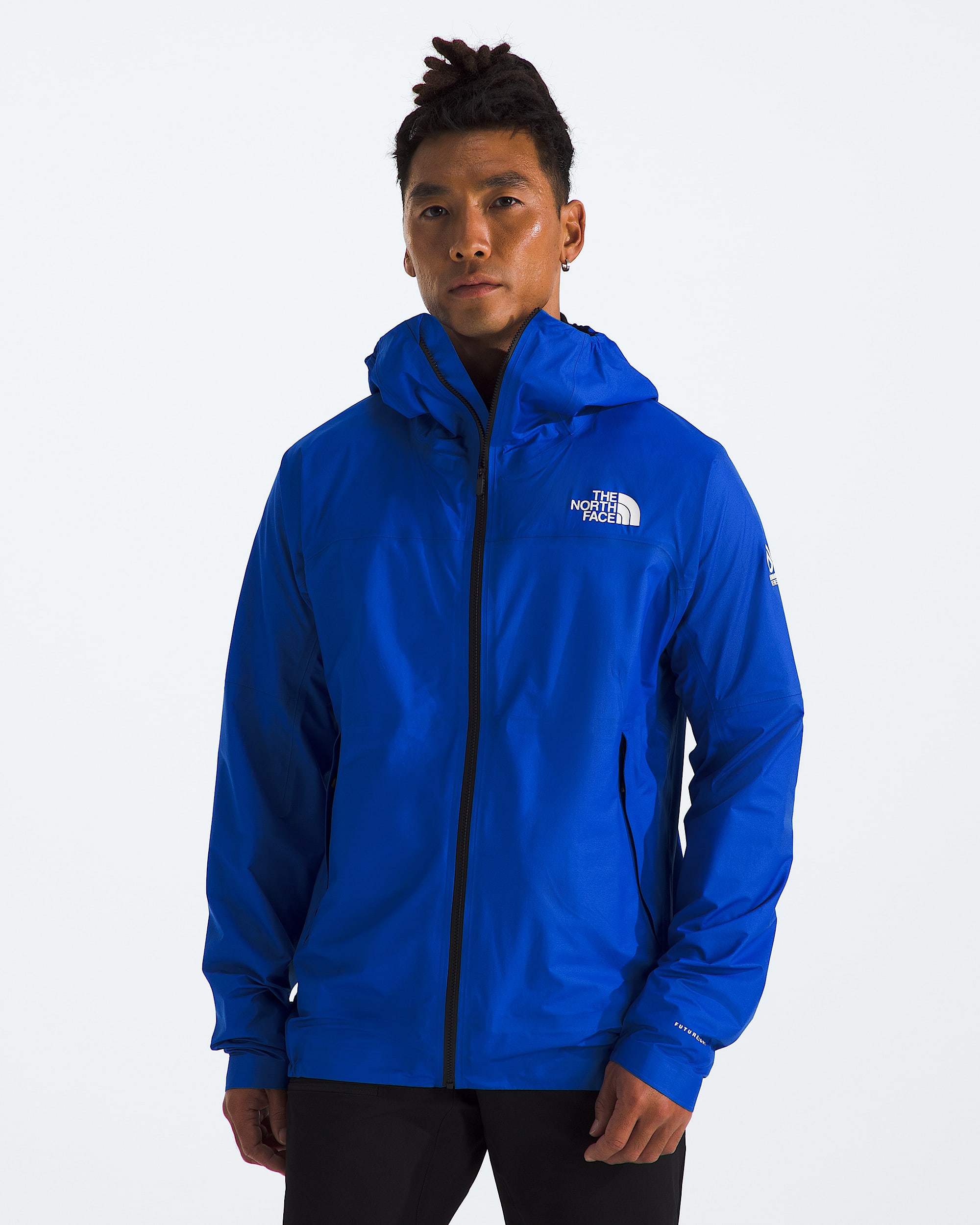
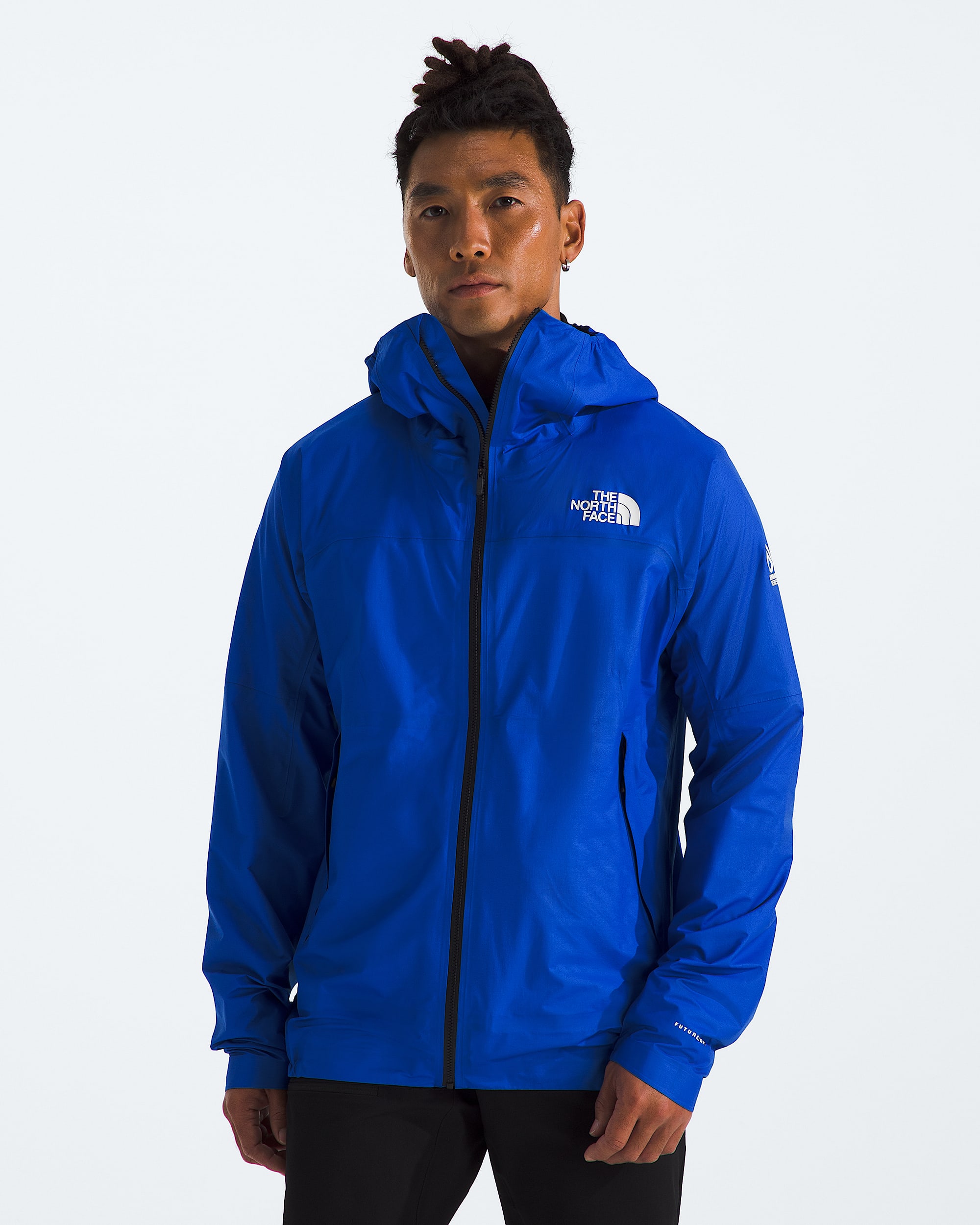
Before choosing an offer, check that the tag is NF0A8A4D rather than NF0A84PR, Summit Superior NF0A86WG or the Graphic Summit Superior. Confirm color and size for the exact listing, review the current chart, and check seller, package contents and return terms. The blue studio image mapped here is the official style-specific visual reference for asset code CZ6; it does not prove hidden construction or package details. Review the linked buying assessment for the documented fit case and purchase checks, not for a live price or availability promise.
Key specifications
Key details at a glance
| Shell construction | 3-layer shell |
|---|---|
| Manufacturer-listed weight | 224 g |
| Manufacturer fit label | Regular fit |
| Face fabric | 100% recycled nylon ripstop face |
| Underarm venting | |
| Stows in its own pocket | Yes |
Use the exact model’s instructions for operating limits, supplied equipment and version differences.
Sources for this review
Sources for this assessment
- Men's Waterproof Rainwear category and its model recommendations — The North Face US
- Men's Summit Series Papsura FUTURELIGHT Jacket, style NF0A8A4D — The North Face US
- Men's Summit Series FUTURELIGHT Papsura Jacket, earlier style NF0A84PR — The North Face US
- Men's Summit Series Papsura FUTURELIGHT Jacket NF0A8A4D, official TNF product image asset code CZ6
Build a shortlist from documented features
The finder compares explicit product facts, not a rain test, fit guarantee or promise of comfort.