
Your needs, this model
Does it fit your priorities?
Can I filter for a men's shell-only jacket with a three-layer shell, pit zips and recycled-nylon-ripstop face together?
Yes. The exact US NF0A8C9A page documents a men's Summit FUTURELIGHT shell, seam-sealed three-layer construction, zipped underarm vents and a recycled-nylon-ripstop woven main-body face. All are listed for this one jacket. This is documented feature matching, not an independent waterproofness, airflow or fit test.
Explore this need in the finder →What does the manufacturer document about this jacket's underarm ventilation?
The US page lists underarm vents with YKK AquaGuard zippers and bumper stops for temperature regulation, and describes lighter fabric in the underarms. That supports the pit-zip option; it provides no airflow rate, temperature change or independent venting test.
Explore this need in the finder →Does the exact page say that NF0A8C9A packs into one of its pockets?
No self-stow route is listed in the reviewed exact-style page. It names chest and internal pockets, but an ordinary storage pocket or organizer is not evidence that the jacket packs into it. Verify this detail for the exact edition if pocket stow is essential.
Explore this need in the finder →Does the three-layer shell include insulation for cold rain?
No insulating garment or assembled insulated rain setup is listed for NF0A8C9A. It is assessed as a shell over wearer-chosen clothing, so select base and midlayers for the conditions you expect; the page supplies no temperature rating.
Explore this need in the finder →What the exact style is for
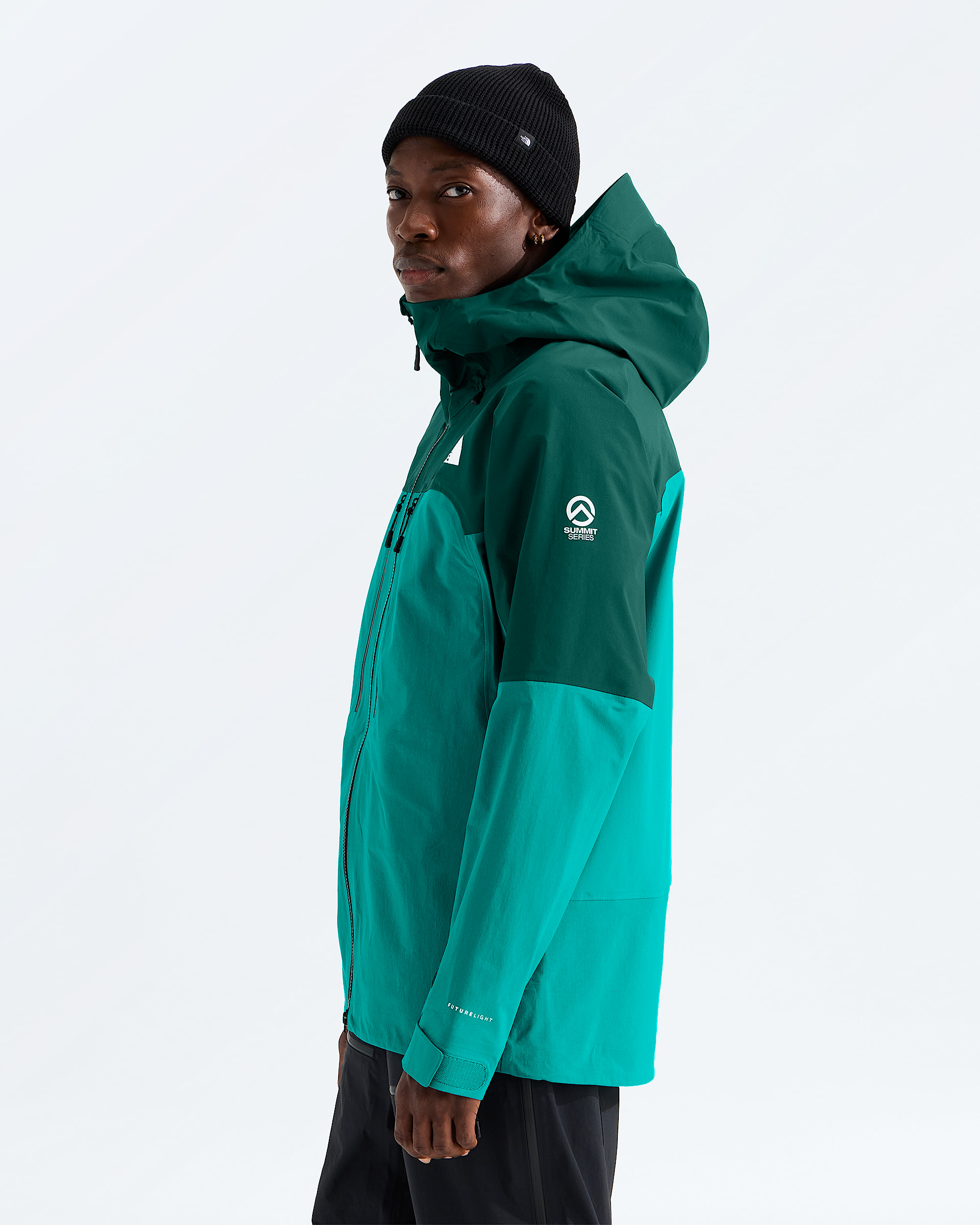
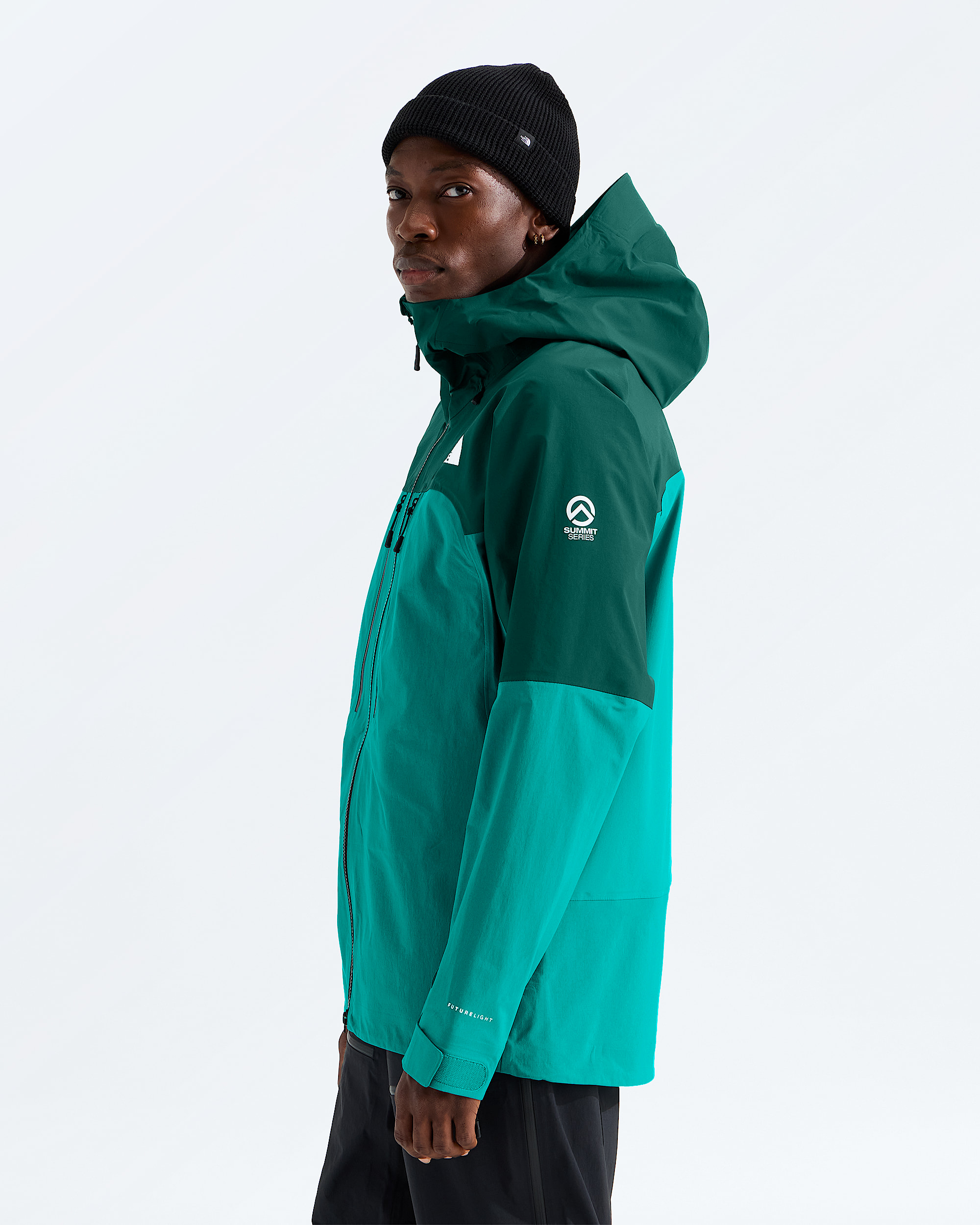
This assessment is for The North Face Men's Summit FUTURELIGHT Torre Egger Jacket, style NF0A8C9A. The observed North Face rainwear listing named this exact style; the manufacturer's US product page then supplied its construction and feature details. The evidence points to a technical alpine shell, not a general-purpose jacket with a vague waterproof label: the page identifies a seam-sealed three-layer FUTURELIGHT build, articulated patterning, a helmet-compatible hood and zipped underarm vents. No hands-on use or independent weather test is claimed here.
The combination matters more than the Summit name by itself. Someone comparing a lightweight daily shell with a high-output climbing layer should first check whether the exact product record documents the features they need together. NF0A8C9A does list 3L construction and pit zips on the same jacket, so those are not borrowed from a related Torre Egger pant or another Summit style. The page also identifies its main body as recycled-nylon ripstop, a useful material distinction when that specific face construction is essential.
Layering, hood and ventilation
The jacket is documented as shell-only. Its page lists no included insulation or joined warm-layer system, so plan the base and midlayers separately and check the fit of the shell over them. The maker labels the cut Regular and lists sizes S through XXL, but that is a pattern description rather than a personal fit guarantee. Compare the current US chart with your measurements and intended layers; if a climbing helmet is part of your setup, account for it when checking the hood.
The hood is described as attached, adjustable and helmet-compatible, with a bonded brim and cord-lock adjustment. Articulated patterning is intended to support movement, while the exact page lists adjustable cuffs and a two-sided internal hem cinch. These details describe available adjustments, not proof that the jacket will fit a particular harness, helmet or body. The listing does not report a range-of-motion test.
For heat management, the product page specifically lists underarm vents with zipper closures, plus lighter fabric panels in the underarms. It also describes a perforated internal draft flap. Those are credible reasons to consider the model for active use, but the source gives no ventilation rate, cooling measurement or demonstration of how the openings behave under a pack. A zipper feature is not an airflow score. If venting under weather exposure is a hard requirement, verify that the offered style is still NF0A8C9A and inspect the exact construction rather than relying on a family name.
Shell materials and pockets
The maker's material details split the garment into two zones. It specifies a 70-denier, 163 g/m² three-layer main body with a recycled-nylon ripstop woven face and nylon tricot backer. Hood, underarms and back panel use a lighter 20-denier, 92 g/m² three-layer fabric with a recycled-polyester face and recycled-nylon tricot backer. This means the jacket is not uniformly one face material. The listed grams per square metre describe fabric mass per area, not the weight of the finished jacket, and neither figure predicts abrasion life.
The reviewed page lists two zipped chest pockets, an internal gear loop and mesh organizer in the left chest pocket, and two interior mesh drop-in pockets. It does not identify a pocket as the jacket's self-stow destination, give a packed size, or list a clip loop intended to secure a packed shell. The organizer and gear loop should not be treated as evidence of pocket stow. If a compact stuff-in-your-pocket layer is the priority, compare a model whose exact page explicitly documents that feature; the men's Valley View, for example, is separately assessed with its own maker-documented stow route, but it uses a different shell and face-fabric description.
Evidence limits and who should compare it
The North Face calls the shell waterproof and breathable and says its seams are sealed. Those are manufacturer claims; the reviewed US page provides no numerical hydrostatic-head or breathability result, and this review does not verify them in use. It lists an average weight of 1 lb 3 oz (529 g) and a 29.875-inch center back. Treat both as maker specifications, not local measurements or personal-fit predictions.
The US page describes a fluorine-free/non-PFC durable water-repellent finish. That language is not silently converted into the questionnaire's narrower statement that specified components are made without intentionally added PFAS, so that field remains unconfirmed. The page also supplies no temperature rating or included insulation. The jacket is therefore a poor match for someone who wants a bundled warm liner or needs the exact PFAS statement documented, and a poor choice for anyone who requires proven performance numbers rather than a manufacturer's material and feature record.
Compared with a simpler rain shell, NF0A8C9A's strongest documented case is the particular mix of three-layer construction, underarm zip vents, recycled-nylon-ripstop main face and helmet-compatible hood. Before choosing it, decide whether those features justify a 529 g listed jacket when packability and insulation are not documented. Confirm the style number, color, selected size, seller, package and return terms on the exact offer; category presence does not establish stock or a current price. This is a source-based model assessment, not a hands-on review.
Key specifications
Key details at a glance
| Shell construction | 3-layer shell |
|---|---|
| Manufacturer-listed weight | 529 g |
| Manufacturer fit label | Regular fit |
| Face fabric | Main body: 100% recycled nylon ripstop woven face |
| Underarm venting | underarm_pit_zips |
Use the exact model’s instructions for operating limits, supplied equipment and version differences.
Sources for this review
Sources for this assessment
Build a shortlist from documented features
The finder compares explicit product facts, not a rain test, fit guarantee or promise of comfort.