
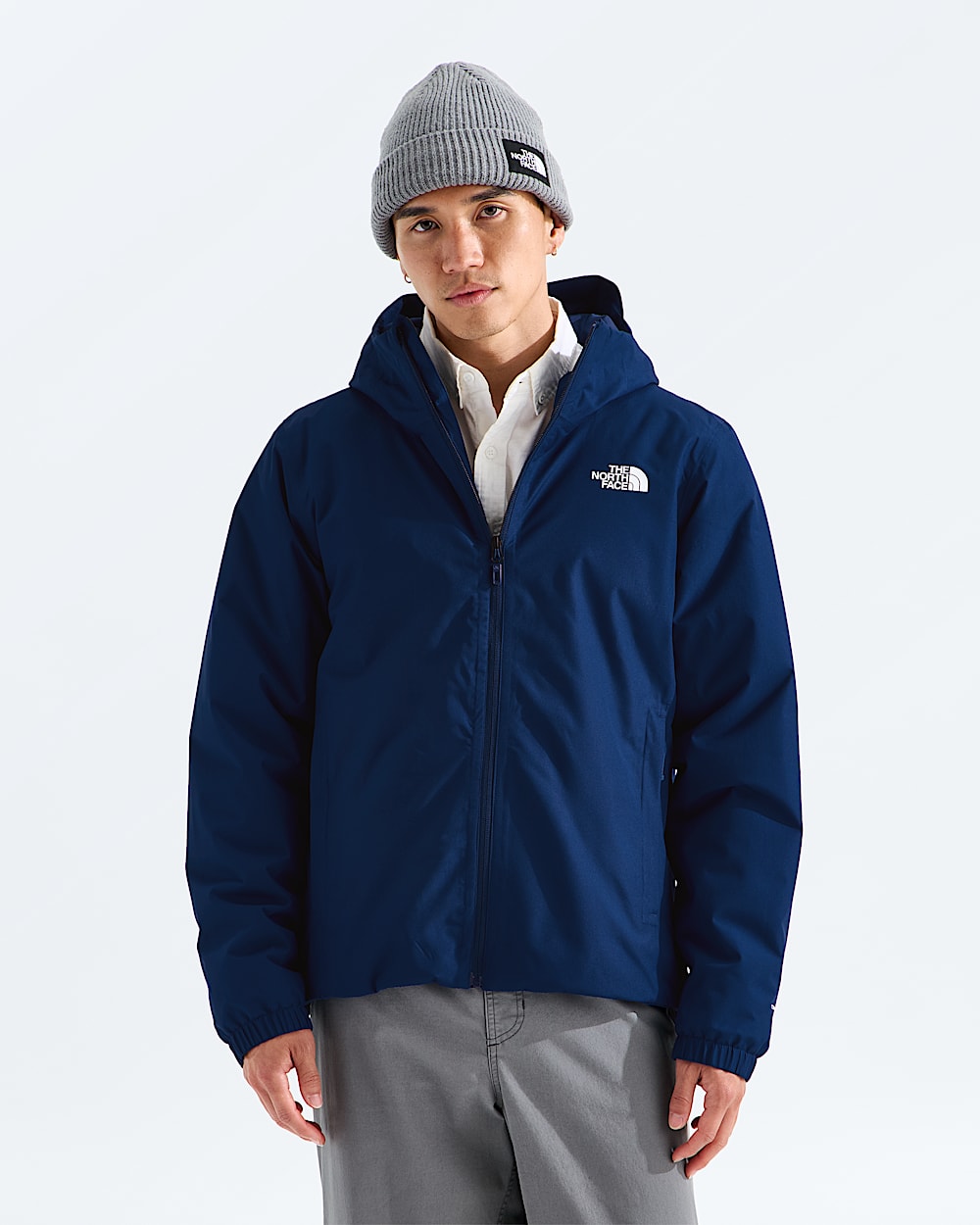
Your needs, this model
Does it fit your priorities?
Does NF0A8G0T support an insulated rain arrangement?
Yes. The North Face describes the exact jacket as a waterproof DRYVENT Mono shell with 100 g of synthetic insulation in the body, sleeves and hood. This establishes the documented insulated arrangement, not a temperature rating or measured warmth claim.
Explore this need in the finder →Can the same jacket serve as a shell-only rain layer?
The product page does not describe a removable liner or an uninsulated operating mode. This review therefore records only the insulated arrangement; that missing shell-only evidence is not converted into a match.
Explore this need in the finder →Does the exact product page confirm pit zips, three-layer construction or pocket stow?
No such features are listed on the checked page. It identifies a two-layer shell and zippered hand pockets, but does not establish underarm pit zips or an own-pocket stow route. Unknown details should be checked against the exact offer rather than inferred.
Explore this need in the finder →Does ‘fluorine-free DWR’ satisfy this site's PFAS wording filter?
Not on the current evidence. The product page describes a fluorine-free DWR finish, but it does not provide the questionnaire's specific statement about components made without intentionally added PFAS. The private tag stays unknown, and this choice does not match the exact style.
Explore this need in the finder →The North Face's Men's Quest Insulated Jacket is style NF0A8G0T, a two-layer DRYVENT Mono rain jacket with insulation built into the body, sleeves and hood. That combination matters more than the shared Quest name: this is not simply the separate Quest shell with a warm layer tucked into the package, and the checked product page does not describe a way to remove its insulation. The notes below assess the published US model record, not an item worn or tested by us.
Choose it for built-in insulation, not a shell-only routine
The exact product page lists 100 g of 100% polyester synthetic insulation and says it is distributed through the body, sleeves and hood. That is meaningful evidence that warmth is part of this garment's rain setup, but it is not a temperature rating or a prediction of comfort in a particular forecast. The page publishes no measured warmth result, and the 100 g figure alone does not tell a shopper how warm the entire jacket will feel against their layers, activity and weather.
Because no zip-out or removable component is documented for NF0A8G0T, the supported rain arrangement is the insulated jacket as a whole. A buyer who wants to switch between an uninsulated shell and a separate midlayer should compare a product that explicitly supports both modes. For example, the separate Marmot Men's Minimalist Pertex 3-in-1 assessment documents shell-only and joined-liner arrangements for that exact model; those details do not transfer to the Quest.
A seam-sealed two-layer shell, without a published score
The North Face describes the jacket as a waterproof, breathable, seam-sealed DRYVENT Mono 2L construction. Its technical detail lists a 75-denier body fabric at 122 g/m² and identifies that body fabric as 100% recycled polyester. The 75-denier figure describes the listed material specification; it is not a durability test. The page does not provide numerical waterproof-pressure or breathability results, so a shopper who needs comparable test values will not find them in the checked product record.
The product page also calls its DWR finish fluorine-free. I keep that statement at the same level of specificity: it is not rewritten as an unqualified claim that the whole jacket is PFAS-free, and it does not match this site's narrower filter for a statement about components made without intentionally added PFAS. A purchaser with a chemical-material requirement should inspect current product details and supplier language for the exact style rather than treating similar phrases as interchangeable.
Closures and pockets are listed; ventilation and stow are not
The maker lists an attached three-piece hood with a bonded brim and back cinch, an exposed reverse-coil center zip, an internal draft flap and a zipper garage. Encased-elastic cuffs and an adjustable hem drawcord provide additional ways to close openings. The exact page also describes forwarded side seams for movement and secure-zip hand pockets. These are useful construction details to compare against a commute or casual walk, but the page gives no independent evidence about rain exclusion, comfort or mobility in use.
For a faster hiking pace, two details are left open. The page does not list underarm pit zips, and it does not say that either hand pocket is a self-stow pocket. That is different from proving that no version ever has another feature; it means those capabilities are not established for the reviewed style and selected page. If pit-area venting or a packable pocket-stow route is essential, do not count generic words such as “breathable” or “rain protection” as a substitute for a named feature.
Fit and length still need an exact-size check
The North Face labels the cut Standard Fit and says it leaves room for layering. The page lists sizes XS through XXL, identifies one photographed model wearing size M, and gives a 29-inch center-back length. These details can help a shopper compare the product record with a size chart, but they do not tell us how the jacket will fit another person's shoulders, torso, sleeve reach or preferred midlayers. No garment try-on or measurement was performed for this review. Compare your own body measurements with the current men's size chart and check that the hem and sleeves cover the clothing you intend to wear underneath.
What the listing does not settle
The checked page does not list the jacket's total product weight, a compressed size, a numeric shell performance rating, an operating temperature range or a product-specific care sequence in the fields reviewed here. It also does not identify a shell-only rain mode, pit zips, own-pocket stow or the questionnaire's precise intentionally-added-PFAS phrase. Those are unknowns, not a reason to invent favorable or unfavorable values. The illustrated Estate Blue image is linked from the manufacturer's exact NF0A8G0T page, but color and current offer details should be checked again before choosing an item.
The Quest Insulated is most relevant when a shopper wants a men's-fit rain jacket with documented integrated synthetic insulation. It is a less direct fit for someone who wants one shell to adapt across warm and cold conditions, a documented three-layer shell, underarm vents, a verified stow pocket, or numeric membrane data. The directory and product page are manufacturer records, not independent tests or proof of current stock; use the exact style number and current seller terms when comparing a real offer.
Key specifications
Key details at a glance
| Shell construction | 2-layer laminate |
|---|---|
| Manufacturer fit label | Standard fit |
| Face fabric | Recycled polyester; weave not specified |
| Underarm venting |
Use the exact model’s instructions for operating limits, supplied equipment and version differences.
Sources for this review
Sources for this assessment
Build a shortlist from documented features
The finder compares explicit product facts, not a rain test, fit guarantee or promise of comfort.