
Your needs, this model
Does it fit your priorities?
Does this women's style include built-in insulation?
Style 85160 is the shell-only Women's Boulder Fork. Patagonia's separate insulated women's Boulder Fork is style 85225; the checked 85160 page specifies no separate insulation layer, so choose separate clothing layers for warmth.
Explore this need in the finder →Can I count on underarm pit zips for ventilation?
The checked 85160 feature list does not identify pit zips. Its H2No® shell description is not proof of an adjustable vent, so treat underarm venting as unconfirmed for this exact style.
Explore this need in the finder →Does it have a self-stowing pocket?
The checked manufacturer page does not specify pocket stow or packed volume for style 85160. If that feature is essential, verify it for the exact jacket rather than assuming a shared brand design.
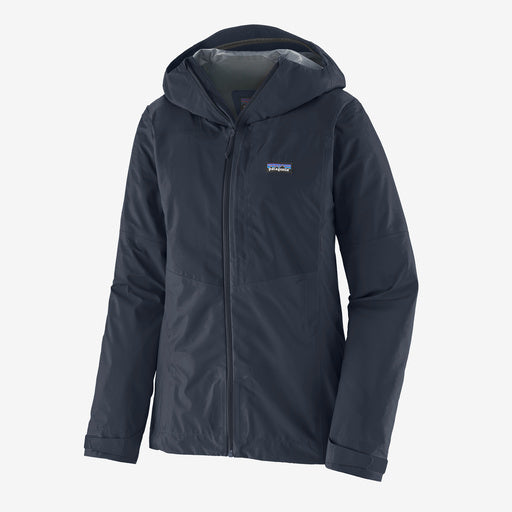
Explore this need in the finder →Patagonia's Women's Boulder Fork Rain Jacket is the three-layer, uninsulated style 85160. The current US product page labels it regular fit and lists a 354 g (12.5 oz) weight. It describes a 3.7-oz, 30-denier face made from 100% recycled polyester ripstop, with a polyester membrane, recycled-polyester tricot backer, and durable water repellent finish. The style number matters: the women's insulated Boulder Fork is a separate garment, style 85225, with an added lining and Thermogreen insulation. This assessment concerns only the shell-only 85160.
What the simple shell arrangement buys—and leaves open
With no separate insulation layer listed for style 85160, warmth is something the wearer supplies. That can be useful when one shell needs to cover different conditions through the choice of layers underneath. It also means the jacket does not answer a request for a one-piece insulated rain layer. Patagonia's “regular fit” label is not a promise of space for every fleece, nor a sizing recommendation for a particular body; use the current women's size chart and check the chosen size with the layers you intend to wear.
The company describes the 3-layer H2No® construction as waterproof/breathable and says the face, membrane, and DWR finish are made without intentionally added PFAS. Those are manufacturer descriptions. The page gives no numeric waterproof-pressure rating or breathability result, and our assessment includes no laboratory or field rain test. A layer count helps distinguish construction, but does not by itself predict comfort, heat buildup, or long-term water resistance.
Hood, pocket placement, cuffs, and hem
The Boulder Fork's low-profile hood has a laminated visor and a single-pull adjustment. Patagonia says it accommodates different headwear, sheds water, and lies flat when not in use. Those are useful points to check in person if hood volume, peripheral sightlines, or helmet compatibility is important; no helmet rating or fit test is reported here. The center-front zipper is described as waterproof and exposed. The company lists one left-chest zip pocket and two high-set, watertight, zippered welt handwarmer pockets. The elevated hand pockets are intended to remain accessible around a pack waistbelt, and Patagonia says they are large enough for a fly box, map, or notebook. Actual access still depends on the belt and your own pocket contents.
Minimal hook-and-loop cuff tabs and a drawcord hem let the wearer adjust openings. Patagonia says the hem cord routes through the front pockets, reducing bulk beneath a pack belt. The page emphasizes a streamlined set of details, but it does not list underarm pit zips or describe a pocket-stowing design. Treat those as unconfirmed for this exact style rather than assuming they appear because other jackets in the catalog offer them. If heat management is a priority, ask whether the listed design fits your activity; a waterproof/breathable shell claim is not a substitute for a specified vent or a measured breathability value.
Compared with the Women's Torrentshell 3L
Patagonia's Women's Torrentshell 3L style 85246 is another uninsulated three-layer shell, but has different documented materials and functions. The Torrentshell uses a 50-denier ECONYL® recycled nylon ripstop face, and Patagonia explicitly lists underarm pit zips and self-stow into a handwarmer pocket. The Boulder Fork uses a 30-denier recycled-polyester ripstop face and its page lists the hood, pockets, cuffs, and hem without those two features. That distinction is more useful than assuming the shared H2No® label makes the jackets identical.
The manufacturer-listed weights are close: 354 g for style 85160 and 352 g for style 85246, a difference of just 2 g in the published figures. That number is not a practical ranking; colors, sizes, and garment tolerances may complicate comparisons, and neither page supplies an independent measurement protocol. The clearest choice points are therefore the named construction, pocket arrangement, ventilation and stow features, and the fit that works for the individual wearer. Do not infer that the lighter listed style will feel lighter or perform better.
Care, sourcing, and what has not been tested
The checked manufacturer instructions say to machine wash cold, avoid bleach and fabric softener, tumble dry low, use a cool iron, and not steam. Follow the label attached to the purchased jacket, particularly if a later production version changes its instructions. Patagonia also says the jacket was made in Vietnam in a Fair Trade Certified™ factory. This report does not evaluate the factory claim independently, nor does it verify a broader environmental impact beyond the cited materials and specific chemical wording.
Before ordering, confirm Women's Boulder Fork, style 85160, and not the insulated 85225. Compare your measurements with the current chart; then check sleeve and torso coverage over the intended layers and whether the high pockets clear your pack belt. The available evidence supports a feature-based comparison, not a fit guarantee, storm rating, or prediction of garment life. We have not worn or washed this jacket and did not conduct a waterproofness test. For a buyer who wants a regular-fit shell with a three-layer recycled-polyester face and a high-set three-pocket layout, the documented facts offer a clear starting point. For someone who requires pit zips, self-stow, or built-in insulation, the checked page does not establish that those needs are met.
Key specifications
Key details at a glance
| Shell construction | 3-layer shell |
|---|---|
| Manufacturer-listed weight | 354 g |
| Manufacturer fit label | Regular fit |
| Face fabric | 100% recycled polyester ripstop |
| Manufacturer PFAS wording | Made without intentionally added PFAS |
Use the exact model’s instructions for operating limits, supplied equipment and version differences.
Sources for this review
Sources for this assessment
Build a shortlist from documented features
The finder compares explicit product facts, not a rain test, fit guarantee or promise of comfort.