
Your needs, this model
Does it fit your priorities?
Will it work when I want to supply my own warmth layers?
The exact model is described as a three-layer rain shell rather than an insulated jacket. Plan your own layers and check the regular-fit pattern over them; the label does not guarantee personal fit.
Explore this need in the finder →Can I open it to manage heat while moving?
Patagonia lists venting pit zips on style 85241. That documents openings for ventilation, not a measured breathability result or a promise that the jacket prevents perspiration.
Explore this need in the finder →Can I stow it in its own pocket?
The product page says the jacket self-stuffs into its left handwarmer pocket and includes a carabiner clip-in loop; the source does not give a compressed-volume measurement.
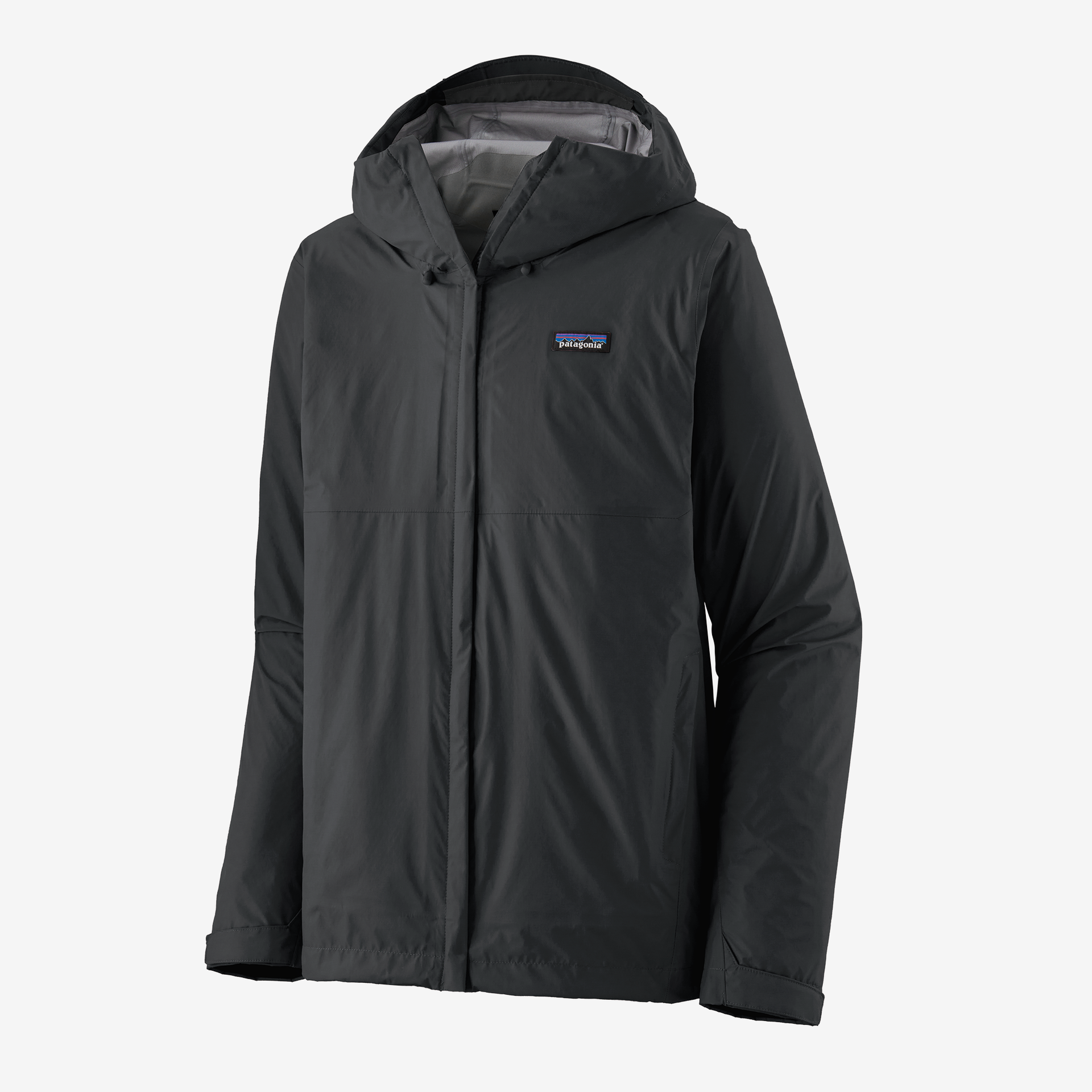
Explore this need in the finder →“Torrentshell 3L” names a specific shell construction, but it does not answer every practical question a rain-jacket buyer has. Patagonia's current US product page identifies this men's version as style 85241, labels its fit regular and lists a 400-gram (14.1-ounce) weight. The material description is unusually useful: a 50-denier ECONYL® recycled nylon ripstop face, polycarbonate PU membrane with 13% biobased content, tricot backer and DWR finish. Patagonia says the fabric, membrane and finish are made without intentionally added PFAS. These are manufacturer specifications, not measurements we reproduced.
Best read as a feature-complete shell, not a warm coat
The product is described as a waterproof/breathable H2No® three-layer shell. The listed design provides the weather-facing layer while leaving insulation to the clothing under it. That can suit a buyer who wants to vary layers between a mild wet commute and cooler outdoor time. It is a poor shortcut for someone seeking warmth already built into a single garment: the product page does not describe this Torrentshell as insulated. For cold, wet use, plan a suitable mid-layer separately and check whether the regular-fit cut moves comfortably over it.
Vents help, but do not turn a claim into a test
One practical strength is that Patagonia explicitly lists venting pit zips, rather than leaving underarm ventilation to assumption. They can be opened when conditions and activity call for more air exchange. The same page does not provide a numerical breathability result, nor do we have a controlled test to say how quickly heat or moisture escapes. Waterproof/breathable is the maker's performance description; a pit zip is an opening; neither proves that an individual will stay comfortable during high-output movement.
Useful details for sealing out weather
The hood is two-way adjustable, has a laminated visor and can roll down and stow with a cord-and-hook design. A microfleece-lined neck adds a soft contact surface. Patagonia describes the center-front zipper as snag-free and gives it internal and external storm flaps plus a chin garage. Hook-and-loop cuff tabs and a drawcord hem let a wearer adjust openings. Those details give the shell multiple ways to close off its edges; they are not evidence of seam sealing or a guarantee against water entry, so we do not infer an unstated seam-tape specification.
Pocket stow is specific; packed size is not
The jacket self-stuffs into the left handwarmer pocket, and a carabiner clip-in loop is listed. That is a clear carrying arrangement for a bag or travel routine. Patagonia does not publish the compressed dimensions or volume on the product page, so “packable” should not be read as a promise that it will fit a tiny pocket. The two handwarmer pockets are described as welted, and the product page places the pit zips in the same pocket-feature section.
Fit and care need your own checks
“Regular fit” is the manufacturer's label, not a sizing recommendation for every build. Patagonia publishes a separate men's size chart and suggests using body measurements; check the exact chart, shoulder reach, sleeve coverage and room over the layers you will actually wear. We have not tried it on or made garment measurements. The posted care directions are machine wash cold, do not bleach, tumble dry low, cool iron, do not steam and do not use fabric softeners. Follow the garment label and re-check instructions for the exact season and color you receive.
Who should compare it—and what is still unknown
This style is worth comparing if you want a non-insulated three-layer shell with manufacturer-listed pit zips and pocket stow, and if Patagonia's men's chart fits the body and layers you intend. Look elsewhere if built-in insulation is essential or if a verified breathability score, actual garment measurements, a confirmed helmet fit or a measured packed volume is a must: those facts are not established in this review. Do not assume a related Patagonia jacket shares the same construction or hood details.
Our reading is based on the current manufacturer's product and size-guide records, not firsthand wear, ownership or rain testing. See the separate women's style 85246 assessment for the related but differently patterned model. The manufacturer's live page should be checked again for current colors, sizes and terms before selecting an offer.
Key specifications
Key details at a glance
| Shell construction | 3-layer shell |
|---|---|
| Manufacturer-listed weight | 400 g |
| Manufacturer fit label | Regular fit |
| Face fabric | 100% recycled nylon ripstop |
| Underarm venting | pit zips |
| Stows in its own pocket | Yes |
| Manufacturer PFAS wording | Made without intentionally added PFAS |
Use the exact model’s instructions for operating limits, supplied equipment and version differences.
Sources for this review
Sources for this assessment
Build a shortlist from documented features
The finder compares explicit product facts, not a rain test, fit guarantee or promise of comfort.