
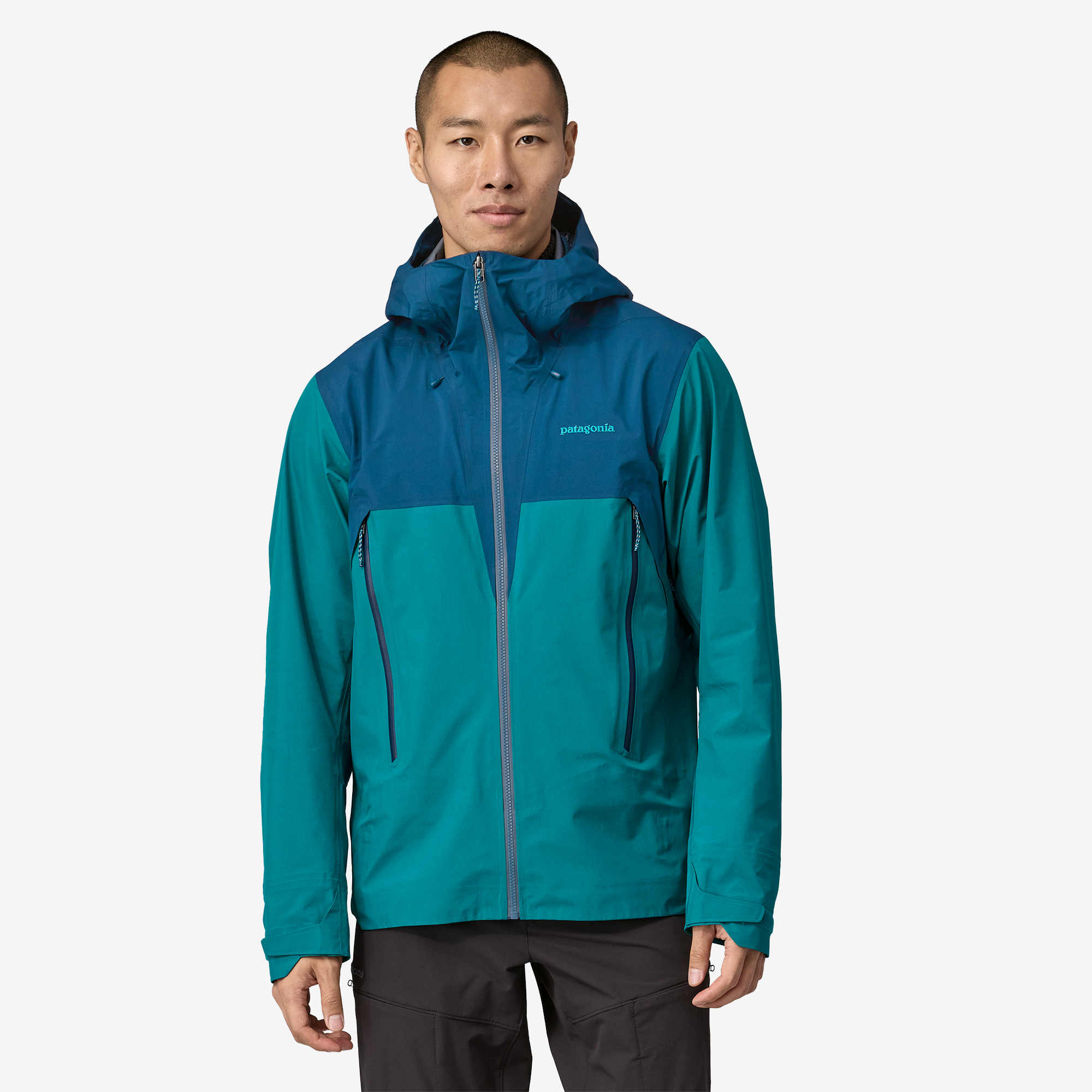
Your needs, this model
Does it fit your priorities?
Does style 85750 have underarm venting?
Yes. Patagonia lists watertight two-way pit zips. Their presence is documented; this review has not tested airflow or comfort.
Explore this need in the finder →Is the hood compatible with a climbing helmet?
The product page identifies a helmet-compatible hood with a lightly insulated Storm Seal gasket and dual-point adjustment. Check helmet and harness compatibility in person before relying on a fit assumption.
Explore this need in the finder →Is this a fully insulated jacket or a shell?
The named weather garment is a three-layer shell. The page lists 65-g PlumaFill only in the hood gasket and no separate insulated liner; it does not establish a warmth rating.
Explore this need in the finder →Patagonia's Men's Super Free Alpine Jacket is an alpine hard shell first, not a general-purpose coat with incidental weather resistance. The manufacturer describes style 85750 as a regular-fit, three-layer GORE-TEX ePE Performance shell built for modern alpinism. Its use-specific details—helmet hood, harness-clear hand pockets, internal cuff gaskets and two-way pit zips—make the strongest case for it. A shopper who only needs a light shell for errands may be paying for details that are more useful on a steep, equipment-heavy day. This assessment is based on the model's published specification, not wear testing.
A three-layer shell with alpine hardware
The shell's construction is specified as 2.9-ounce, 40-denier, 100% recycled nylon GORE-TEX ePE Performance fabric with C-KNIT backer technology and a DWR finish. The checked page calls it waterproof and breathable but does not give a hydrostatic-head result, a lab breathability figure or a product-specific field-test protocol. Those omissions matter: the marketing words establish Patagonia's intended role for the garment, not a numerical comparison against another membrane or a guarantee for an individual storm.
At 420 grams listed, it is described as light and packable, but its page does not identify a pocket into which the jacket stuffs. Do not treat the general word “packable” as proof of a self-stowing pocket. Nor does the 65-gram PlumaFill figure turn the garment into an insulated jacket: that insulation is in the Storm Seal hood gasket, not across the body as a removable or built-in warmth layer. The rain arrangement remains shell-only; choose midlayers separately for the conditions and activity.
Why the vent and pocket placement matter
Two-way, watertight pit zips are an explicitly listed feature. Their two-way openings give the wearer a way to vary the underarm opening while moving, but the source does not quantify the airflow or say how the vents feel during exertion. The high hand pockets are positioned above a climbing harness or pack waistbelt, with an interior left-chest zip pocket for smaller items. This is a concrete equipment-access choice rather than a vague claim that the jacket has “good storage.”
The hood is helmet-compatible, lightly insulated at the gasket and adjusted at two points with Cohaesive cord locks. A drop-tail hem, two-point cord adjustment and Clean Clip hip cutout are similarly climbing-specific. Patagonia describes the cutout as reducing interference while clipping into gear; whether this shape is useful depends on the wearer's harness and movement. Internal cuff gaskets and minimal hook-and-loop closures are intended to keep sleeves located when swinging a tool, but the product page does not establish a fit result over anyone's gloves.
Fit and limits to check before choosing
“Regular Fit” is the manufacturer's label, not a claim about how this jacket will fit a particular body, helmet or layering system. Compare your measurements with Patagonia's men's chart and consider the layers you will wear underneath; then check the hood with the helmet and the high pockets with the harness you actually use. The listed weight is a useful specification to compare, not an independent measurement by this site.
There are also useful unknowns. The page does not confirm pocket-stow, a removable insulated liner, a numeric waterproof rating, a numeric breathability score or a temperature range. The shell face is described as recycled nylon but not explicitly as ripstop, so it should not be selected for a recycled-nylon-ripstop requirement. Patagonia states that the fabric, membrane and DWR finish are made without intentionally added PFAS; that qualified wording is narrower than a broad “PFAS-free” guarantee.
Who should put it on a shortlist?
It is a plausible candidate when an adult men's fit block, a three-layer shell, helmet compatibility, accessible harness-height pockets and underarm venting are all useful in the same outing. It is less compelling if simple daily coverage, self-stow or built-in body insulation is the priority. A basic shell with a less specialized pocket layout may be a more sensible comparison for town or low-output use; an insulated parka is the more relevant comparison when the wearer wants warmth integrated into the garment. Those are different buying jobs, not a universal ranking.
Finally, follow the care instructions rather than assuming that a technical membrane can be treated like any ordinary jacket: Patagonia specifies cold machine washing, low tumble drying, no bleach, cool ironing and no fabric softener. Recheck the exact style number, selected color, size chart and seller's return conditions. Nothing in this specification establishes current stock, price, long-term durability in use or an individual fit.
Key specifications
Key details at a glance
| Shell construction | 3-layer shell |
|---|---|
| Manufacturer-listed weight | 420 g |
| Manufacturer fit label | Regular fit |
| Face fabric | 100pct recycled nylon gore tex epe 40d |
| Underarm venting | W / a / t / e / r / t / i / g / h / t / / t / w / o / - / w / a / y / / p / i / t / / z / i / p / s |
| Manufacturer PFAS wording | Made without intentionally added PFAS |
Use the exact model’s instructions for operating limits, supplied equipment and version differences.
Sources for this review
Sources for this assessment
Build a shortlist from documented features
The finder compares explicit product facts, not a rain test, fit guarantee or promise of comfort.