
Your needs, this model
Does it fit your priorities?
Can the Heyes Peak be used as a rain shell without the liner?
Yes. Patagonia describes the outer shell worn alone as a raincoat and the zip-out jacket worn separately when cool and dry. The shell-only rain setup is a real arrangement; the detached liner by itself is not the documented rain shell.
Explore this need in the finder →Is this a three-layer outer shell?
No. Style 20985's outer shell is described as a two-layer H2No construction. The separate insulated jacket adds a second garment, not a third shell layer.
Explore this need in the finder →Does recycled nylon ripstop form the rain shell's face?
No. Patagonia identifies the outer shell face as recycled-polyester plain weave. The zip-out jacket is nylon ripstop, but that inner layer does not change the rain shell's face-fabric identity.
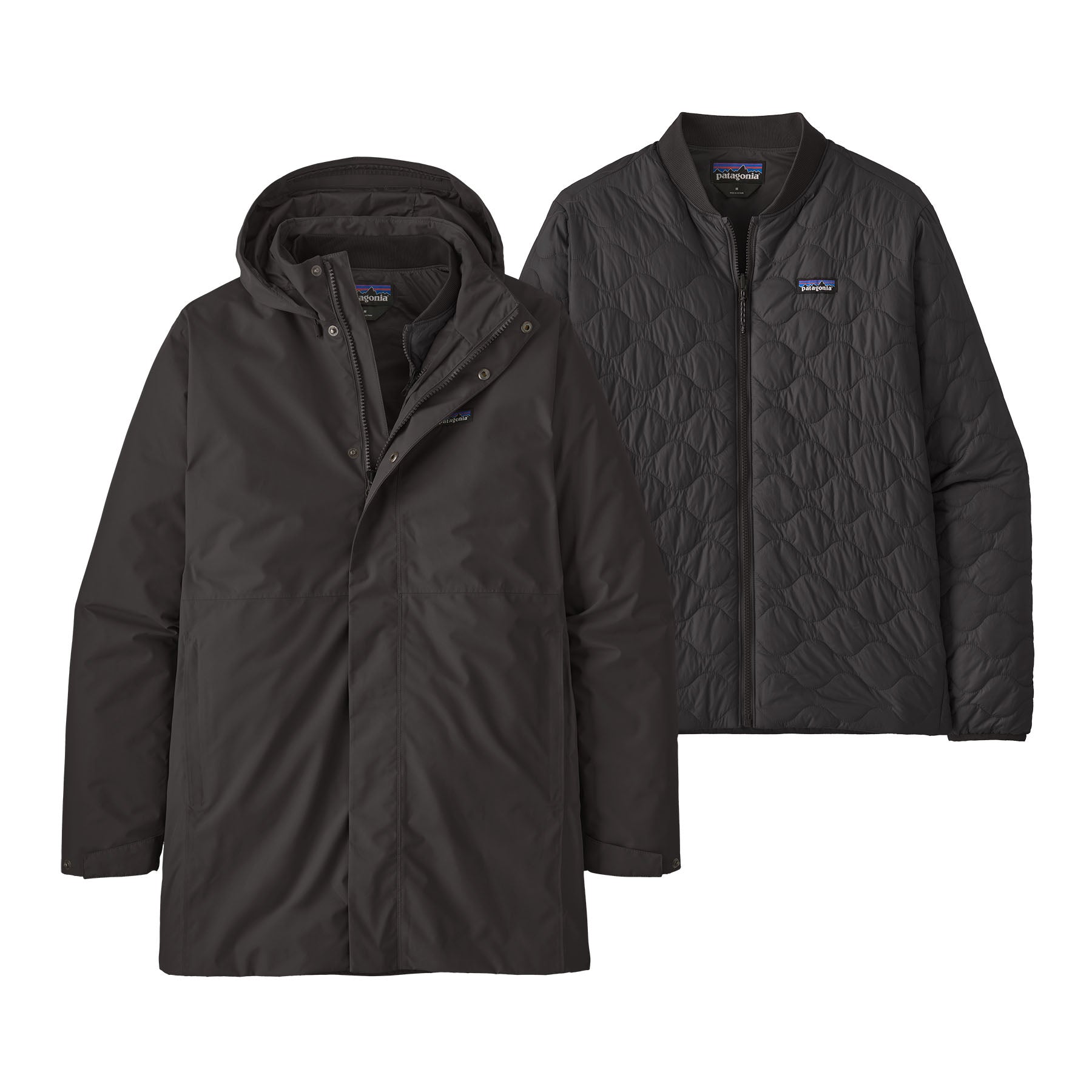
Explore this need in the finder →The Men's Heyes Peak 3-in-1 Parka is best understood as a small rainwear system rather than a single insulated shell. Patagonia's U.S. page identifies style 20985 and describes an outer waterproof H2No shell plus a zip-out insulated jacket. The two can be worn together, or the shell can be worn by itself as a raincoat. This assessment follows those source descriptions; we have not worn the parka, tested its fit, or measured its weather protection.
Three ways to wear it, but only two are rain setups
The useful distinction is which piece is on your body. For wet weather, the shell alone is the shell-only arrangement; when warmth and rain protection are both wanted, the insulated jacket zips into the shell. Patagonia also describes the inner jacket worn separately in cool, dry conditions, but that mode is not a rain-jacket match on its own. The separate arrangements matter: an insulated set does not become one permanently insulated garment, and an outer shell does not acquire a third fabric layer simply because a second jacket can be attached inside it.
This is why style 20985 can be relevant to both a shell-only and an insulated rain setup in the finder. The system has a documented arrangement for each, but the visitor should select the arrangement they intend to wear. In the assembled mode, the shell and zip-out jacket are supplied together. In the shell-only mode, the buyer still owns the liner but leaves it out. That is different from buying a jacket package that contains no insulating layer at all.
Two-layer shell and a separate recycled liner
Patagonia describes the outer shell as a two-layer H2No Performance Standard construction with a 3.4-ounce, 75-denier, 100% recycled-polyester plain-weave face. The page identifies an adjustable hood, a two-way front zip and a storm flap secured by hidden snaps. It also describes a tall, zip-through stand collar that can lie flat. The source does not state a numerical waterproof-pressure or breathability result, a seam-tape specification, or a membrane chemistry, so those details should not be inferred from the H2No label alone.
The zip-out jacket uses a different fabric: 20-denier NetPlus 100% postconsumer recycled nylon ripstop, with 80-g Thermore EVOdown insulation made from recycled polyester. The 80-g label is a material specification, not a temperature rating or a standardized warmth score. Patagonia lists the whole style at 1,020 g, but that figure does not predict how warm any particular wearer will feel. The two fabrics also answer different questions: the shell face is recycled-polyester plain weave, while nylon ripstop belongs to the separate liner, not the rain shell's face.
The maker's product page says its shell DWR and the specified liner and lining finishes are made without intentionally added PFAS. That wording is deliberately narrower than “PFAS-free”; it should not be expanded to every material, chemical residue, or future garment revision.
Pockets and closure are split across two garments
The outer shell has two zippered handwarmer pockets and one secure interior-chest pocket. The zip-out jacket also has two handwarmer pockets and an interior-chest zip pocket. That gives the system useful storage in either standalone layer, but the product description does not explain how the liner pockets are accessed while the two pieces are zipped together. Check the actual garment arrangement if pocket access while assembled is important to you.
The hood is adjustable and the outer front closure has a storm flap, but the checked feature list does not confirm underarm pit zips or a pocket-stow method. A collar that opens flat is not the same as an underarm vent, and a two-piece jacket does not imply that either piece packs into a pocket. Those fields remain unconfirmed in this assessment.
Fit, weight and daily use checks
Patagonia labels the cut regular. With a 3-in-1 set, fit is a two-layer question as well as a single-layer question: consider the shell worn over the liner, then ask whether the shell alone has the room you want for your own clothing. Use the maker's men's body chart and check the current style-specific notes, but do not treat a body chart as garment dimensions or a promise of comfort. No individual has tested this set over particular clothing or waders.
The listed 1,020 g makes this a substantial package beside a simpler, lighter shell, although the scale of that difference is not a warmth comparison. For example, the three-layer Men's Granite Crest is listed at 400 g and has documented pit zips and a chest-pocket stow route; the Heyes Peak instead supplies an attachable insulating jacket and two distinct clothing pieces. Those are meaningful design differences, not a verdict that one is better for every outing.
Who should compare it, and what to verify
Style 20985 is worth comparing if you want one purchase to cover a waterproof shell arrangement and a separate insulated layer for cool, dry wear. It is less straightforward if you only want a low-bulk shell, need a specified vent route, or require numerical performance data. Before choosing an offer, confirm style 20985, the exact color and size, that both the shell and zip-out jacket are included, and that the selected listing is for the current men's cut. Check the fit in both the assembled and shell-only arrangements, then follow the exact care label; Patagonia's page specifies a cold machine wash and low tumble dry among the care instructions.
This is a source-led assessment of the documented product configuration. The page does not establish a temperature range, a packed volume, or independent rain, durability, fit or ventilation results. Keep those unknowns in view rather than treating the 3-in-1 name or insulation weight as a field test.
Key specifications
Key details at a glance
| Shell construction | 2-layer laminate |
|---|---|
| Manufacturer-listed weight | 1020 g |
| Manufacturer fit label | Regular fit |
| Face fabric | 100% recycled polyester plain weave |
| Manufacturer PFAS wording | Made without intentionally added PFAS |
Use the exact model’s instructions for operating limits, supplied equipment and version differences.
Sources for this review
Sources for this assessment
Build a shortlist from documented features
The finder compares explicit product facts, not a rain test, fit guarantee or promise of comfort.