
Your needs, this model
Does it fit your priorities?
Can the rain shell be worn without the insulated jacket?
Yes. Patagonia describes the waterproof outer shell and zip-out jacket as wearable together or separately. The shell-alone rain setup is the shell-only arrangement; the liner by itself is not the waterproof rain shell.
Explore this need in the finder →Does the '4-in-1' name mean a three-layer shell?
No. The official specification calls the outer H2No shell two-layer. The zip-out piece is a separate reversible jacket, not a third shell layer; the maker's configurations do not change the shell's 2-layer construction.
How much built-in warmth is specified?
The zip-out jacket has 60-g Thermogreen sleeve insulation and a fleece-lined torso/collar; the manufacturer provides no temperature rating. This supports the insulated combination but cannot determine how warm a particular child will feel.
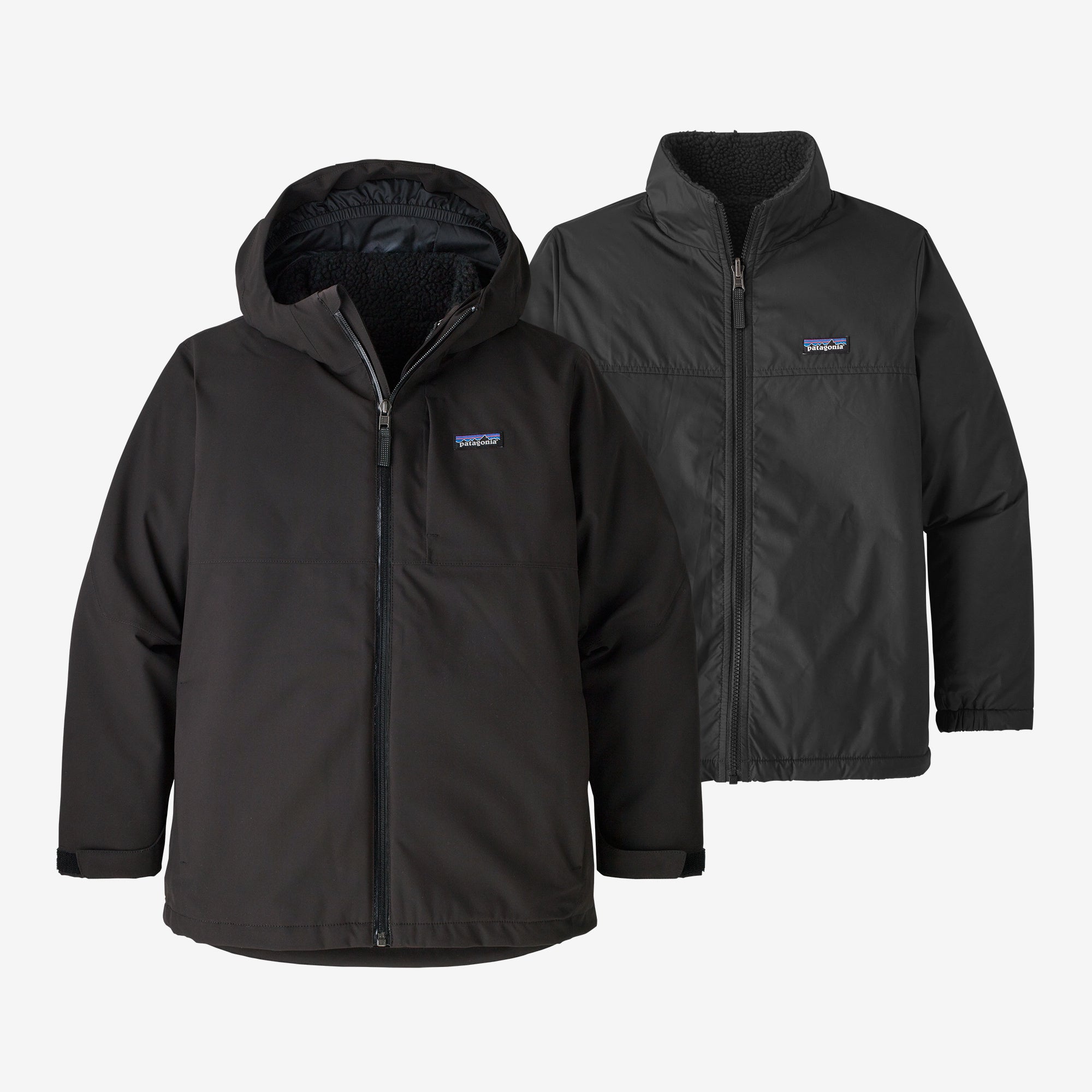
Explore this need in the finder →Style 68035 combines a waterproof outer jacket with a separate reversible zip-out piece, making it a different purchase from a single-layer rain shell. Patagonia says the two pieces can be worn together or separately; it calls the design 4-in-1 because the inner jacket reverses. The rain-relevant arrangements are the outer shell alone and the shell joined to the liner. The inner piece on its own is not the waterproof shell. This distinction is the key to assessing the jacket, not the “4-in-1” label by itself.
Two separate pieces, two rain setups
The outer shell is a two-layer H2No Performance Standard construction made from 5.3-ounce, 100% recycled-polyester plain weave, with a waterproof/breathable barrier and DWR finish. Its torso lining is recycled-polyester tricot mesh; the hood and sleeve linings are recycled-polyester taffeta. Patagonia says the specified shell materials and finish are made without intentionally added PFAS. None of that makes the shell a three-layer design: it remains two-layer even when the separate inner jacket is snapped into it.
For milder wet conditions, the shell can be used without the inner jacket. For a rainy, cold or blustery day, the page describes the insulated liner attached to the shell. The inner piece has a reversible taffeta face and a fleece-lined torso and collar, with 60-g Thermogreen recycled-polyester insulation in the sleeves. This gives a parent a documented way to add a separate component without changing the shell's layer count. Patagonia provides no temperature range, warmth score or test result, so the combination should not be treated as a set-for-all-weather answer.
What changes in the shell itself
The three-panel hood is internally gusseted; the full-length waterproof zipper has an internal storm flap and a soft chin guard. There is a left-chest zip pocket and two covered zippered handwarmer pockets, hook-and-loop cuff adjustment, and a drop-tail hem with an adjustable drawcord. Snap tabs at the collar and sleeves connect the liner. These features describe a child-oriented system with a little more assembly than a one-piece shell: the adult should check that the actual liner, attachment points and selected shell are present in the package.
The maker lists 853 grams for the set. That is a substantial contrast with the 230 grams listed for the Kids' Torrentshell 3L, but weight alone does not prove which jacket is more durable or comfortable. The Torrentshell is a simpler three-layer recycled-nylon-ripstop shell with no separate insulated piece listed; this jacket is a two-layer recycled-polyester shell plus its reversible liner. They should be compared by desired components and layering workflow rather than by assuming that more layers in one construction means better rain performance.
Fit and practical checks for a growing child
Patagonia calls style 68035 Regular Fit and provides a kids' size guide. Check the child's current measurements and the intended underlayers, then allow for the included liner when comparing the fit of the assembled system. The chart is body guidance, not finished garment dimensions; the label does not promise a particular sleeve length, room to grow or fit over a backpack. As children grow, the useful question is whether the shell and inner component both work now, not whether a larger size might extend use for an unknown number of seasons.
Underarm pit zips and self-stowing into a pocket are not documented. The page lists shell and liner storage pockets, but none is identified as a stuff sack. Numeric waterproof-pressure, breathability, temperature and abrasion results are also absent. Patagonia's H2No description explains its stated standard, not a comparison score against every other waterproof jacket.
When the extra component makes sense
This jacket merits a shortlist if the shopper wants a waterproof shell and an included reversible layer that can be attached for added warmth. A family that wants a light shell and chooses insulation independently may prefer the Kids' Torrentshell; a shopper seeking a simple one-piece insulated winter jacket should compare other models rather than pay for a liner they will not use. Patagonia's specified care is machine wash warm, no bleach, low tumble dry and cool iron. Check the style number, color, size chart and package contents before purchase. This review makes no claim to have tested the jacket, measured its warmth or observed a child wearing it.
Key specifications
Key details at a glance
| Shell construction | 2-layer laminate |
|---|---|
| Manufacturer-listed weight | 853 g |
| Manufacturer fit label | Regular fit |
| Face fabric | 100pct recycled polyester plain weave |
| Manufacturer PFAS wording | Made without intentionally added PFAS |
Use the exact model’s instructions for operating limits, supplied equipment and version differences.
Sources for this review
Sources for this assessment
Build a shortlist from documented features
The finder compares explicit product facts, not a rain test, fit guarantee or promise of comfort.